


About the CWKN
Wellbeing policy is gaining momentum worldwide. There is an emerging global movement to bring better concepts and measures of human wellbeing to the centre of policy-making.
The Canadian federal government, several provinces and an increasing number of municipal governments and community organizations are approaching policy and budget decisions based on a growing body of knowledge about what makes life good. A global pandemic has also increased public understanding of what really matters for wellbeing and there is a call for governments to make wellbeing or quality-of-life a central policy objective and source of accountability for current and future generations.
A growing group of organizations and individuals from public, private, academic and community sectors have come together to build a Canadian Wellbeing Knowledges Network (CWKN) to share ideas for advancing and supporting wellbeing policy approaches in Canada.
Our common purpose is to:
- provide opportunities for people to engage in catalytic conversations and idea sharing about how they conceptualize, measure, research or support wellbeing and how policy decisions can use a wellbeing lens
- build, exchange and leverage our collective knowledge on the latest wellbeing policy evidence, initiatives and practices
- activate and strengthen a cross-sectoral and inclusive collaboration network for wellbeing policy across Canada
The CWKN community involves diverse grassroots organizations across the country; federal, provincial, territorial, Indigenous, and municipal governments; researchers across disciplines; the private sector; and key voluntary sector organizations and networks. All are welcome.
The CWKN is led by Prof Chris Barrington-Leigh at McGill, Danny Graham at Engage Nova Scotia, Danya Pastuszek at Tamarack Institute for Community Engagement, Nora Spinks at Work Life Harmony, and Val Morrison at the National Collaborating Centre for Healthy Public Policy and l’Institut national de Santé publique du Québec. Jetske Duintjer joined the group as CWKN Manager in late April 2026. A Strategy Group of around 30 individuals from across sectors and jurisdictions has provided further expertise and leadership.
Our Leadership Team

Christopher Barrington-Leigh
Associate Professor; CWKN co-founder
McGill University
Professor Chris Barrington-Leigh’s research has a focus on empirical and quantitative assessments of human life satisfaction, and their implications for economic, social, and environmental policy. He uses large international as well as national surveys, experiments, and economic theoretical modeling to understand individual, community, and even global happiness. His other fields of expertise relate broadly to the transition to sustainability, including energy transition in China and the role of residential street networks in cementing future environmental and social outcomes related to urban form, globally. At McGill’s Bieler School of Environment and the Economics Department, Chris teaches courses on the economics of well-being and on environmental economics. He originally trained in space plasma physics at M.I.T., Stanford, and Berkeley, before studying Economics at the University of British Columbia. Chris was a Global Scholar of the Canadian Institute for Advanced Research (2009-2014) and is a member of the Global Young Academy.
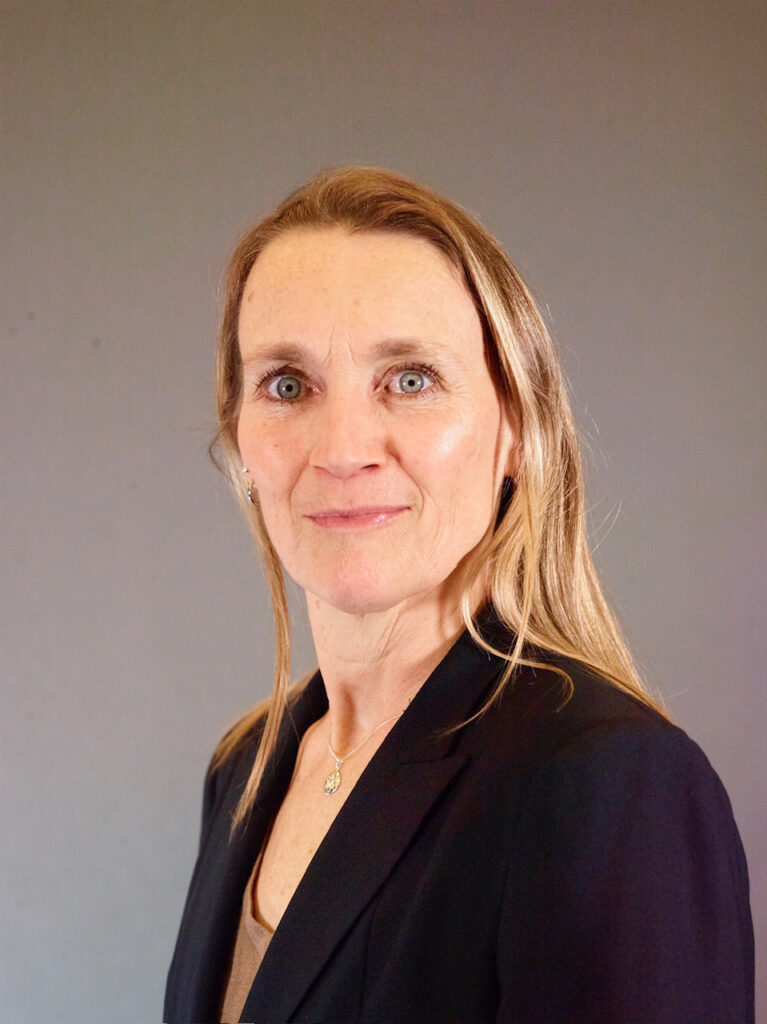
Jetske Duintjer
Manager
CWKN
Jetske started as the Manager for the CWKN in late April 2026. As a Program Manager with significant experience in the non-profit sector, she most recently served as National Program Director at the Inter Council Network, where she led a coast-to-coast capacity-building initiative for organizations in the international cooperation sector funded by Global Affairs Canada. Before that, she spent sixteen years at Médecins Sans Frontières Canada, managing the organizations’ membership communities in Canada and international advocacy initiatives including the MSF Urban Spaces project. She further worked as a Project Coordinator and Country Manager in humanitarian assistance, women entrepreneurship and adult literacy projects in Colombia, El Salvador, Peru, Indonesia, Angola and Mozambique.
She holds an MA in International Relations from the University of Groningen and speaks English, French, Spanish, Dutch, and some German. Jetske brings deep expertise in network leadership, community engagement, and knowledge mobilization.
Danny Graham
Chief Engagement Officer
Engage Nova Scotia
Danny Graham has held senior positions in Canada in the public, private and community sectors. He is credited with starting the Nova Scotia Restorative Justice Program and has worked to advance justice reforms with the United Nations and countries spanning four continents. From 2005-2014 he was the Chief Negotiator on Aboriginal Rights and Reconciliation for the Province of Nova Scotia. For the past ten years he has been the Chief Engagement Officer for Engage Nova Scotia – a non-profit that is working with all sectors, and all levels of government in Canada, to build a new approach for improving quality of life for everyone.
Almost 13,000 Nova Scotians responded to a 230-question survey administered by Engage NS in cooperation with the Canadian Index of Wellbeing in 2019, making it one of the largest single quality of life data sets anywhere. With Dalhousie University, they have built ground-breaking new tools to easily extract the findings of the survey at hyper-local and demographically intersectional levels. Partners are now using this approach to make more effective strategy, policy and budget decisions that improve wellbeing for everyone. With the support of the government of Canada, the Government of Nova Scotia and several municipal governments, the next comprehensive quality of life survey is planned for 2025.

Val Morrison
Scientific Advisor
National Collaborating Centre for Healthy Public Policy, INSPQ
Val has been a scientific advisor at the NCCHPP since 2008. She holds B.A. and M.A. degrees in sociology from Concordia University and pursued PhD course work and comprehensive examinations in social stratification, cultural theory, and research methodology in the sociology department at Carleton University. Her projects at the Centre have mostly been in the area of Health Inequalities: intersectionality; policy approaches to reducing health inequalities; and wicked problems. Recently, she has contributed to the project Analyzing Public Policies, by looking into public policy competencies for public health, and to the Population Mental Health and Wellness project by working on wellbeing budgets.

Danya Pastuszek
President and CEO
Tamarack Institute for Community Engagement
I am a mother, daughter, neighbor, runner, and partnership builder. My ancestors are from Ukraine, and I lived 35 years in the US before moving to Canada. I’ve worked with resettling refugees, youth and adults entangled in our systems of criminal Justice, and with government, business, non profit and community leaders building partnerships accountable to economic mobility. At Tamarack, I work beside 200 communities in their work to end poverty, foster belonging, and transition to a just and sustainable future. My colleagues and I seek to understand, amplify, and scale what is working in local communities. To connect and care for local leaders and place-based initiatives. To get public policies, narratives and funding to enable community-driven work.

Nora Spinks
Chief Executive Officer
Work-Life Harmony Enterprises
Nora Spinks is the founder, president, and CEO of Work-Life Harmony Enterprises, a consulting firm that helps clients across all sectors achieve optimal organizational, individual, and family well-being. With over 30 years of experience in the field, she is a nationally and internationally recognized leader and innovator who has designed, implemented, and evaluated innovative policies, programs, practices, and benefits with over 1000 organizations.
Nora is a prolific speaker and author who has delivered over 1500 keynote addresses, workshops, and lectures. She has also published many articles in magazines, trade publications and peer-reviewed journals, co-edited a special journal issue on families in Canada, and co-edited a book on Families, Mobility and Work. She holds multiple certifications, including the GBA+ Certificate, the Indigenous Awareness Introduction, and Scrum: The Basics. Nora is passionate about empowering individuals, families, and organizations to embrace innovation and optimize performance.
Retired from CWKN Leadership Team

Lisa Wolff
Director, Policy and Research
UNICEF Canada
Lisa Wolff is Director, Policy and Research at UNICEF Canada, with a mission to advance the rights of Canada’s children to develop to their fullest potential, consistent with international human rights standards. Collaborating with government, institutions, civil society, researchers and private sector partners, Lisa works across issues and sectors to advocate for and with children and youth. Lisa is an advisor to many initiatives including the Making the Shift Networks of Centres of Excellence Implementation Management Committee (addressing youth homelessness). Lisa received the Queen Elizabeth II Diamond Jubilee Medal from the Governor-General of Canada in 2012.

Jehan Casey
Director
First Nations Public Service Secretariat
Jehan Casey is Haida through her father from Skidegate, and grew-up in the Lower Mainland (Vancouver area) in B.C. She is a mother, stepmother, and wife, and the eldest of five siblings. Jehan took on the role of Director for FNPSS when the organization was re-established in 2018. Under her leadership, FNPSS has effectively responded to the needs defined by BC First Nations for governance and administration capacity development. 92% of BC First Nations have participated in FNPSS learning initiatives, which now include training; mentorship networks; development of governance and administration toolkits and guides; conferences, forums and webinars; funding program delivery; and research.